Just a Girl Who Loves Books, Coffee SVG: A Designer's Take
When I first opened the Just a Girl Who Loves Books, Coffee SVG, I wasn't looking at a finished embroidery file. I was looking at a design asset — a well-structured, high-resolution graphic that someone like me, a maker who digitizes her own work, can confidently pull into embroidery software and turn into something tangible. The mood is immediate: cozy, slightly whimsical, unapologetically bookish. It’s the kind of visual that belongs on a soft crewneck sweatshirt or a sturdy canvas tote, worn by someone who carries a novel in their bag and a reusable coffee cup in their hand. From an embroidery reviewer’s perspective, the shape, layout, and typographic personality all signal one thing: this will read beautifully on a mid-weight fabric with a little texture, and it will absolutely sell as a handmade gift.
The file set includes a print-ready PNG at 4500×5400 pixels, 300 dpi, an editable EPS, and a clean SVG — all standard for the Graphics category inside Crafts. But what matters to me is how that SVG path data behaves when I bring it into my digitizing software. The lettering is smooth, the spacing feels intentional, and the overall silhouette isn’t too blocky. There’s a nice balance between the two motifs — books and coffee — without one overpowering the other. That balance is crucial for embroidery because a design that’s too dense in one area can pucker thin fabric, and a design that’s too sparse can look lost on a large tote. This one sits in a comfortable middle ground.
First Impressions That Matter for Stitch Work
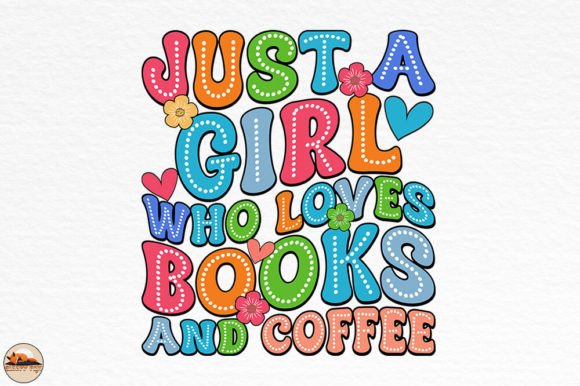
The overall composition reads as a hand-lettered phrase, almost like a quiet personal motto. The words “Just a Girl Who Loves Books and Coffee” have a gentle arc, and the supporting elements — a coffee cup, a stack of books, maybe a tiny heart — feel like a single, cohesive unit. That’s a gift for embroidery. A design that stays tightly grouped reduces the risk of registration issues on a home embroidery machine, especially when you’re hooping a thick towel or a slippery sweatshirt fleece. The visual personality is warm, approachable, and a little nostalgic. I can already picture it stitched in a soft cream thread on a heather gray hoodie, or in a rich espresso brown on a natural linen pillow cover. The mood isn’t trendy; it’s lived-in. That kind of design has staying power in a craft business.
Where This Design Belongs in Real Embroidery Projects
I tested the SVG by quickly mapping out a few projects in my mind — the way I always do before I commit to a full digitizing session. The immediate winner is a custom reading tote bag. A heavyweight canvas tote with a flat, stable surface is ideal for this design. The words will have enough room to breathe, and the theme plays beautifully into the book lover aesthetic. Move the same design to a crewneck sweatshirt, and you’ve got a cozy, personalized gift that feels like a bookstore find. On a kitchen apron, the coffee part of the message makes perfect sense. I’ve also seen similar motifs work on rectangular pillow covers for a reading nook, and on tea towels for a bookish kitchen. The design’s versatility across different product categories is a real strength for small shop owners.
For Etsy sellers and craft fair vendors, this is one of those designs that pulls people in. A customer browsing a rack of embroidered sweatshirts might not stop for a generic floral, but the phrase “Just a Girl Who Loves Books and Coffee” acts like a little magnet. It’s recognizable, it’s personal, and it communicates a slice of identity. That kind of buyer engagement translates directly into product value. The design doesn’t just sit on the fabric; it starts a conversation. That’s a powerful thing when you’re trying to build customer trust and handmade presentation that feels authentic.
Practical Limits Every Embroiderer Should Check
While the design is strong, it’s not a one-size-fits-all solution. The SVG file gives you the vector backbone, but you must still convert it into a proper embroidery file with the right stitch types. Before you even open your digitizing software, think about the final product. If you’re using a small hoop — say a 4x4 inch — the lettering may need to be simplified. Thin strokes, tiny serifs, and delicate loops can disappear under satin stitches or become messy if the scale is too small. I’d recommend a minimum design width of around 5 inches for clarity, especially on textured fabrics like a waffle weave towel or a ribbed knit cap.
Dark fabrics demand extra attention. The PNG file shows a design that likely works on a light background, but if you’re stitching on a navy or charcoal sweatshirt, you’ll need to test thread colors that pop without looking harsh. A bright white thread might feel too stark; an off-white or pale cream often creates a softer, more intentional look. And always, always test the design on a scrap of the same fabric you plan to use. I’ve ruined a beautiful linen tea towel because I didn’t check how the fill stitch would settle into the weave. The result was a puffy, distorted mess. With a design like this one, where the charm is in the crisp lettering, you can’t afford to lose that edge.
Fabric and Stabilizer Choices That Make or Break the Outcome
Stretchy fabric is another area where you need to be careful. A cotton-spandex blend T-shirt can stretch during hooping, causing the lettering to warp. I always use a good cut-away stabilizer behind the design and sometimes a water-soluble topper on top to keep the stitches from sinking into the pile. For a tote bag, a tear-away stabilizer is often enough, but I up the stitch density slightly on the outer edges of the lettering to prevent fraying. The Just a Girl Who Loves Books, Coffee SVG has a lot of organic curves in the lettering — those need to be supported so the “o” in “Loves” doesn’t collapse into a solid blob after a few washes.
Frequent washing is another consideration. If you’re selling a sweatshirt that will go through the laundry every week, avoid a dense satin stitch on tiny details. A well-placed running stitch or a lighter fill might hold up better. The design’s charm doesn’t rely on heavy coverage; it’s more about the silhouette and the phrase itself. Sometimes less thread is more durable and more comfortable to wear.
How the Design Boosts a Handmade Business
From a business perspective, a design like this opens up multiple revenue streams. You can use the PNG for a printable mockup in your Etsy listing, letting customers see exactly how the finished product will look on a T-shirt or a poster. The EPS file is ideal for creating clean branding assets or boutique product tags. And the SVG? That’s your workhorse for embroidery digitizing. I’ve found that strong, text-based designs with a clear theme often outperform complex, multi-color illustrations in a craft business because they’re easier to produce consistently, require fewer thread changes, and have a broader appeal.
When I’m prepping a new product — say, a set of embroidered kitchen towels for a holiday market — I consider how the design will look stacked next to other items in my booth. The book-and-coffee theme sits naturally alongside other literary or cozy designs, creating a cohesive brand identity. A customer who buys a “Just a Girl Who Loves Books and Coffee” tote might come back for a matching baby onesie or a set of embroidered bookmarks. That kind of cross-selling is gold for a small shop, and it starts with a design that feels like it belongs to a larger story, not just a one-off gag.
Testing Before You Commit to a Product Run
I always run a black-and-white mockup of the design before digitizing. Viewing the SVG in a single color helps me see if the composition holds up without the distraction of multiple hues. The Just a Girl Who Loves Books, Coffee SVG passes that test. The lettering weight is consistent, and the secondary elements don’t crowd the phrase. That’s a sign of a well-crafted graphic. When I take it into my embroidery software, I’ll likely map the main text to a satin stitch and the smaller decorative bits to a lighter fill or a simple running stitch, depending on the final size. I’ll also experiment with contrasting thread colors — maybe a matte black thread on a natural linen or a warm gold on a deep burgundy apron.
Another practical note: confirm your licensing before you sell finished items. The product description for this graphic says it’s for sublimation on T-shirts, banners, posters, cards, and more, but it doesn’t explicitly spell out embroidery or commercial use. As a designer, I never assume. I’ll reach out or check the terms to make sure I can legally sell the embroidered products I create from this SVG. That’s a small step that protects your business and keeps everything above board.
Stitching the Idea into a Real Product
Let me walk you through a real scenario I’m planning right now. I have a client who runs a small bookstore café. She wants a few custom embroidered tote bags to sell at the counter. The brief: something that feels like it was made by a fellow book lover, not a corporate logo. I immediately thought of this design. The compiled SVG gives me a clean starting point. I’ll digitize it at about 6 inches wide, choosing a warm taupe thread for the lettering and a soft cream for the coffee cup outline. The tote itself is a medium-weight canvas in a faded olive green. I’ll use a medium-weight cut-away stabilizer and a tear-away on top for extra support. The stitchout will take a few test runs to get the pull compensation right, but the end result will be a bag that looks like it was plucked from a cozy reading corner. That’s the kind of product that commands a premium price and keeps customers coming back.
For a holiday gift, I’d take the same design and shrink it slightly for a set of embroidered fabric bookmarks or a patch that can be ironed onto a denim jacket. The possibilities are genuinely open, as long as you respect the design’s limits. In Crafts and Graphics, the line between a digital file and a finished product is all about how you handle the transition. This SVG gives you a solid foundation. The rest is your skill, your thread choices, and your eye for detail.
If you’re an embroidery designer, a small business owner, or a maker who loves to turn a clever phrase into something wearable and lasting, the Just a Girl Who Loves Books, Coffee SVG is worth your time. Test it, digitize it thoughtfully, and pair it with fabrics that feel as warm as the sentiment itself. That’s how you turn a graphic into a product people actually use and gift with pride.