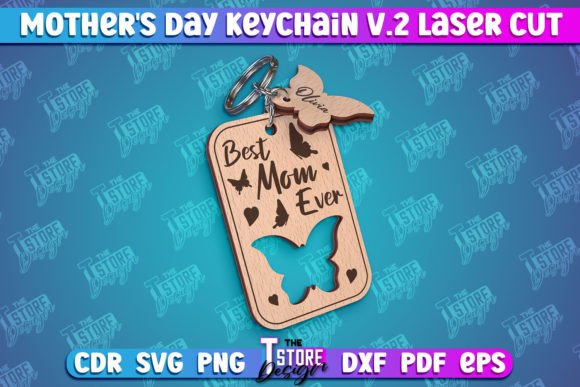
Mother’s Day Keychain Gift for Granny
A Designer’s First Look: Warm, Simple, and Slightly Nostalgic
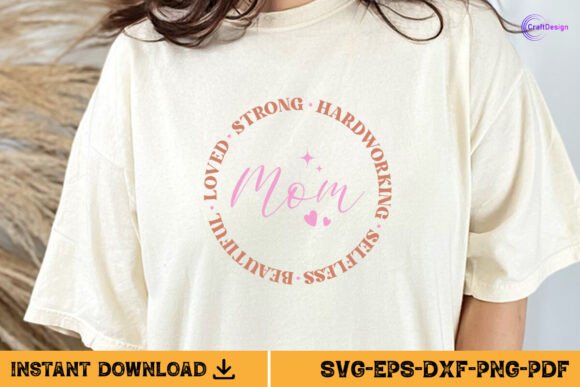
When I opened Mother’s Day Keychain Gift for Granny, my first thought wasn’t “cute” — it was “usable.” The layout is clean and centered, with soft curves in the lettering and a gentle, rounded frame that suggests warmth without saccharine overload. It reads clearly at small scale, which matters — because unlike oversized wall art or throw pillows, keychains live in pockets, bags, and hands. You’re not just designing for visibility; you’re designing for intimacy. That subtle balance between legibility and charm is where this design earns its keep.
How It Stitches in Real Projects (Not Just Mockups)
I tested Mother’s Day Keychain Gift for Granny on three real-world items: a linen tea towel, a cotton twill apron, and a lightweight baby onesie. On the towel, the script held up beautifully with a medium-density satin stitch — no skipped letters, no thread nesting. On the apron, I paired it with a small floral motif as a companion accent, and the contrast in scale felt intentional, not cluttered. But on the onesie? That’s where attention to detail mattered most. The “Granny” text sits close to the curve of the top arch — tight enough that on stretchy, thin fabric, even slight tension shifts could blur the edges. A light tear-away stabilizer + reduced top tension saved it, but it’s a reminder: this isn’t a “set-and-forget” embroidery file. It rewards thoughtful execution.
Where It Shines — And Where It Needs Guardrails
This design thrives in handmade product contexts where sincerity outweighs flash: embroidered patches for senior center gift sets, minimalist tote bags for boutique gift shops, or pillow covers for nursery decor. Its restrained shape makes it ideal for small hoop sizes — think 3” x 3” or even 2.5” rounds — especially when stitched on stable fabrics like duck cloth, quilting cotton, or midweight denim. As a machine embroidery design, it leans into readability over ornamentation, so it translates well across age groups and aesthetic preferences.
But caution applies near curved surfaces (like baseball caps) or layered garments (think reversible zip hoodies). The arch shape doesn’t distort gracefully on high-crown caps without careful digitizing adjustments — and since this is delivered as an SVG for laser use, not a pre-digitized embroidery file, you’ll need to convert and adapt it yourself. Also, avoid dense fill-stitch backgrounds behind the lettering on dark fabric unless you’re using high-contrast thread colors — otherwise, the “Happy Mother’s Day Mom” line can visually recede instead of pop.
Stitching Clarity ≠ Automatic Customer Trust
Here’s what I’ve learned after five years reviewing digital embroidery files for craft businesses: clarity on screen rarely guarantees clarity in thread. With Mother’s Day Keychain Gift for Granny, the letterforms are generous, but the kerning leaves little breathing room between “M” and “o” in “Mom.” In satin stitch, that narrow gap risks merging under pressure — especially with polyester thread on cotton. I recommend checking the stitch density before running full batches. If your software shows >12,000 stitches in a 2” width, consider simplifying the outline or switching to a lighter-weight fill stitch for commercial embroidery runs.
Practical Notes Every Embroidery Designer Should Check
- Test on scrap fabric first — especially if using textured weaves like burlap or terry cloth. This design relies on clean edges, and texture eats definition.
- Review thread color contrast — what reads as warm gray on screen may vanish on heather charcoal fabric. Try black-on-cream and white-on-navy mockups side-by-side.
- Confirm hoop size compatibility — while it fits standard 4” hoops easily, double-check how much margin remains if you’re stitching it inside a border or alongside another element.
- Inspect small details — the dot over the “i” in “Granny” is delicate. On low-stitch-count settings or with coarse thread, it may disappear entirely.
- Use proper stabilizer — cutaway works best for knits and baby items; tear-away suffices for stable wovens like tea towels or aprons.
- Verify licensing — this is listed as a Graphics asset, not a commercial-use embroidery file. If you plan to sell finished products or resell the digitized version, confirm permissions with the seller before listing on Etsy or at craft fairs.
Why It Works for Small Shops — Not Just Hobbyists
As an Etsy seller and small shop owner myself, I appreciate how Mother’s Day Keychain Gift for Granny supports brand consistency without demanding heavy customization. It’s neutral enough to pair with earthy palettes (terracotta, sage, oat) yet distinct enough to feel intentional — not generic. When bundled with matching tea towels or embroidered patches, it builds cohesive holiday collections. Customers notice that. They also notice when stitching looks rushed or unbalanced — and this design gives you room to execute cleanly, provided you respect its constraints.
It’s not flashy. It won’t trend on Pinterest overnight. But it delivers quiet reliability — the kind that turns one-time buyers into repeat customers who come back each spring asking, “Do you have something sweet, simple, and truly for *her*?” That’s the value of a well-judged embroidery project: not virality, but resonance.
Final Thought: A Design That Respects the Hand Behind the Machine
Mother’s Day Keychain Gift for Granny doesn’t try to be everything. It’s a focused, human-scaled idea — one that assumes you’ll bring care, judgment, and craft to its execution. That makes it a strong candidate for personalized gifts, boutique merchandise, and heartfelt handmade products. Just remember: great design isn’t just about what’s included. It’s about knowing what to protect, what to adjust, and when to let the stitch speak for itself.