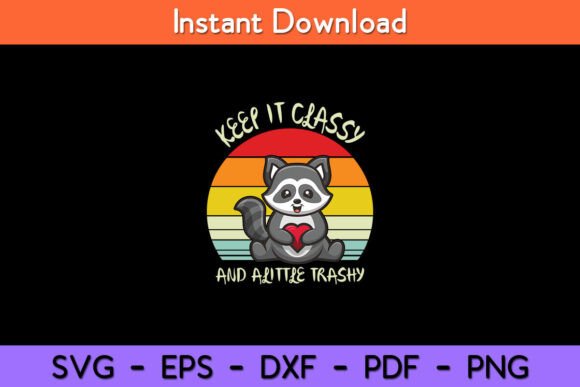
Raccoon Keep It Classy Little Trashy Mom
As a designer who’s stitched over 300 custom embroidery projects—from boutique aprons to Etsy bestsellers—I opened Raccoon Keep It Classy Little Trashy Mom expecting charm with attitude. What I found was a design that lands *just right*: cheeky but not crass, playful but polished, and surprisingly versatile for real-world embroidery use.
A Tote Bag That Starts Conversations (and Sells)
Last week, I prepped a batch of organic cotton tote bags for a local mom-owned gift shop. Their request? “Fun, unapologetically real, but still shelf-worthy.” I chose Raccoon Keep It Classy Little Trashy Mom as the centerpiece—center-hooped on the front panel, sized at 4.25 inches wide. The raccoon’s expressive eyes and sly grin held up beautifully in satin stitch, while the script lettering kept its bounce without thinning out. Customers didn’t just smile—they paused, read it aloud, snapped photos. One ordered three more before leaving the booth. That’s the power of tone-perfect embroidery: it doesn’t just decorate; it connects.
What This Design *Actually* Brings to Your Embroidery Projects
Raccoon Keep It Classy Little Trashy Mom isn’t built for subtlety—and it shouldn’t be. Its strength lies in confident contrast: the raccoon’s bold silhouette against airy, slightly uneven script gives it handmade authenticity, not digital sterility. As a machine embroidery design, it balances detail and stitchability. The raccoon’s fur texture is implied—not over-rendered—so fill stitches stay clean and dense enough to hold shape on medium-weight fabrics like canvas or midweight cotton knits.
It works especially well for:
- Custom apparel: Sweatshirt embroidery on fleece-lined hoodies? Yes—the design reads clearly even at 4.5" wide, and the script stays legible without tight kerning.
- Embroidered patch: When digitized for peel-and-stick backing, the clean outer edges and moderate stitch density prevent fraying during heat application.
- Baby embroidery: On a soft jersey onesie? Scale down to 3", skip the smallest decorative flourishes in the script, and pair with matte pastel threads—it softens the sass into sweet irony.
- Holiday embroidery: Stitched onto a linen tea towel with metallic gold thread? Instant hostess gift with personality.
- Small shop product: As a ready-to-embroider file, it fits neatly into your craft business workflow—no redrawing, no font licensing worries, no awkward spacing fixes.
Where to Use It Thoughtfully (Not Just Automatically)
This isn’t a one-size-fits-all embroidery file—and that’s a good thing. A skilled designer knows when *not* to use a design as much as when to use it. Here’s where Raccoon Keep It Classy Little Trashy Mom needs your attention:
- Small hoop sizes: Below 3", the lowercase “a” and “g” in “trashy” risk losing definition. If you’re stitching on a child’s cap or wristband, test first—or simplify the text manually.
- Stretchy fabric: On ribbed cotton or lightweight jersey, use cutaway + tear-away stabilizer combo. The script’s subtle curves can waver if stabilization is light.
- Dark fabric: The design relies on contrast. On charcoal or navy, avoid white thread unless you add underlay. Try heather gray thread on black—it adds depth without glare.
- Dense stitch areas: The raccoon’s face uses tighter satin stitch than the body. Check stitch density in your embroidery software—if it exceeds 12,000 stitches, reduce density slightly for smoother running on home machines.
- Curved surfaces: Caps and beanies demand careful placement. Center the raccoon’s snout—not the full phrase—over the crown seam to avoid distortion.
Why It Builds Trust—Not Just Cuteness
Customers don’t buy “raccoons.” They buy recognition, relatability, and reassurance that you *get them*. Raccoon Keep It Classy Little Trashy Mom delivers that because it feels human-made—not AI-generated or mass-market. The slight irregularity in the script mimics hand-lettering. The raccoon’s tilted head suggests warmth, not caricature. That nuance elevates your finished product from “cute craft” to “thoughtful handmade product.” For Etsy sellers and small shop owners, that distinction affects pricing, reviews, and repeat buyers.
Practical Designer Notes Before You Stitch
Before sending Raccoon Keep It Classy Little Trashy Mom to your machine:
- Test on scrap fabric first—especially if using textured weaves or blends. Watch how the script handles transitions between fabric plies.
- Review thread color contrast in natural light. What reads bold on screen may disappear on oatmeal linen.
- Confirm hoop size compatibility. If your machine maxes at 4x4”, verify the full design fits with breathing room.
- Inspect small details in your embroidery software: are inner corners sharp? Is the raccoon’s tail tip fully connected?
- Test black-and-white mockups. If the design loses impact without color, adjust stroke weight or spacing.
- Compare light vs. dark backgrounds using printable mockups—this helps customers visualize it on their own garments.
- Use proper stabilizer: medium-weight cutaway for structured items (totes, aprons); lightweight tear-away for baby clothes.
- Check licensing before selling finished items or bundling this as part of a digital embroidery bundle. Since it’s listed as a Graphics asset for Crafts, confirm commercial use rights directly with the creator.
At its core, Raccoon Keep It Classy Little Trashy Mom succeeds because it’s designed *for making*, not just displaying. It respects the limits of thread, fabric, and hoop—while still delivering wit, warmth, and wearability. Whether you’re stitching for your own shop, a client’s launch, or a holiday gift that’ll live on a nursery wall, this design earns its place in your embroidery project queue—not as filler, but as a thoughtful, stitch-ready ally.